Showing posts with label Universe. Show all posts

Friday, February 15, 2013

Marvelphabet

52 Marvel characters, rendered here with minimalistic typography that's both heroic and villainous. How many can you identify?


Source: baboondesign.blogspot.com  /  via: laughingsquid.com


New on the Internet today: "Marvelphabet", a pair of stylized alphabets yolked around figures from the Marvel Universe. Designer Mike Baboon writes:

I'd long considered doing a superhero-themed alphabet but I'd resisted for a variety of reasons, including the sheer immense scope of the superhero universe and the fact that there were other similar pieces out there.

Ultimately, however, superheroes and comics were such an important part of my childhood that I couldn't ignore them. So I added a bit of a challenge: I wanted to represent 26 heroes and 26 villains from a specific universe. I wanted to stick to their face and upper torso only (which meant, among other things, no wheelchair for "X" or extra arms for "o")

The hero alphabet definitely trends easier than the baddies. How many can you identify from each?

Prints, tees, mobile shells, and more available at Society 6 and RedBubble.

Cap tip: Laughing Squid


Source: baboondesign.blogspot.com


Source: baboondesign.blogspot.com


View Entire List ›

Thursday, February 14, 2013

Watch Live as Asteroid 2012 DA14 Whizzes Past Earth


Want to keep tabs on asteroid 2012 DA14 as it whizzes past Earth tomorrow (Feb. 15)? NASA TV and several online astronomy outlets will be tracking this asteroid as it makes its record-setting close shave. This marks the first time there has been an asteroid of this size passing this close that we’ve known a year beforehand. No, there’s no chance it will hit us, but it will come within 27,600 kilometers (17,150 miles) from the surface of the Earth, inside the ring of geosynchronous satellites girdling our planet Earth. It will closest to Earth at 2:25 p.m. EST (19:25 UTC).


Find out how you can watch on TV or online as this 50 meter- (164 feet-) wide space rock goes by:
(...)
Read the rest of Watch Live as Asteroid 2012 DA14 Whizzes Past Earth (374 words)


© nancy for Universe Today, 2013. |
Permalink |
No comment |

Post tags: , , ,


Feed enhanced by Better Feed from Ozh


Eye-Popping Interactive Panorama from the Curiosity Rover

Curiosity Rover's Self Portrait at 'John Klein' Drilling Site, which combines dozens of exposures taken by the rover's Mars Hand Lens Imager (MAHLI) during the 177th Martian day, or sol, of Curiosity's work on Mars (Feb. 3, 2013). Credit: NASA/JPL-Caltech/MSSS

Curiosity Rover’s Self Portrait at ‘John Klein’ Drilling Site, which combines dozens of exposures taken by the rover’s Mars Hand Lens Imager (MAHLI) during the 177th Martian day, or sol, of Curiosity’s work on Mars (Feb. 3, 2013). Credit: NASA/JPL-Caltech/MSSS


There’s an incredible new interactive panorama from the latest Curiosity rover’s self-portrait and surroundings at the “John Klein” drilling site. It was put together by photographer Andrew Bodrov and combines the recent self-portrait and other images to create a full 360-degree panorama created from hundreds of images. The mosaic stretches about 30,000 pixels width.


Click here to see (and go play with) the panorama.
(...)
Read the rest of Eye-Popping Interactive Panorama from the Curiosity Rover (179 words)


© nancy for Universe Today, 2013. |
Permalink |
No comment |

Post tags:


Feed enhanced by Better Feed from Ozh


I’ve Always Dreamed of Being an Astronaut…

Astronaut bedding from Snurk (www.snurkbeddengoed.nl/)

Astronaut bedding from Snurk (www.snurkbeddengoed.nl/)


After seeing this on Google+, I knew I had to do a Bad Astronomer-like “want” post. This is a definite want. You can now be the first in your galaxy to have this awesome new bedding set. The duvet and pillow comes from a Dutch bedding shop named Snurk (that’s Dutch for ‘snoring’): “Underneath these sheets you will dream far beyond the stars…lie down, close your eyes and feel gravity decrease instantly.” They are now taking pre-orders, available in March.


Hat tip to Michael Interbartolo/Edward Burke


© nancy for Universe Today, 2013. |
Permalink |
No comment |

Post tags: ,


Feed enhanced by Better Feed from Ozh


Proof That True Love Exists

Bill & Glad have been married for over 50 years and are a reminder that love can stand the test of time, in sickness and in health. Can you pass the tissues please?


Tissues ready? Press play.


CVC Films produces short works aimed to, "help you explore those unavoidable questions about life, the universe and everything in it." Even if you are a Valentine's Day cynic, this story will warm your heart.


A Cosmic Rose for Your Spacey Valentine

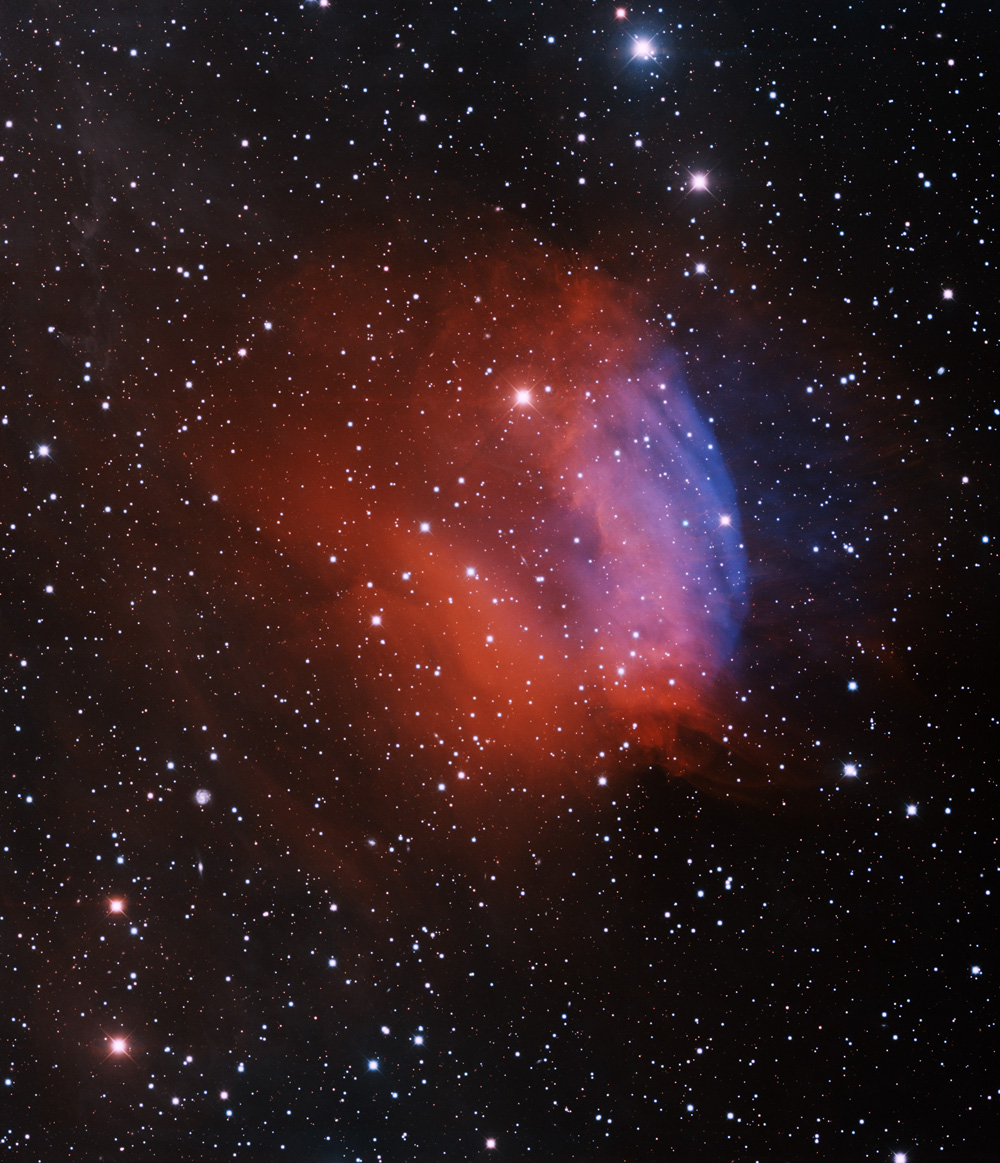
A beautiful planetary nebula, Sh2-174. Credit: T.A. Rector (University of Alaska Anchorage) and H. Schweiker (WIYN and NOAO/AURA/NSF)

A beautiful planetary nebula, Sh2-174. Credit: T.A. Rector (University of Alaska Anchorage) and H. Schweiker (WIYN and NOAO/AURA/NSF)


We space-nerds like to express our amorous feelings, just like the rest of the population (although admittedly some of need more help/prodding in this area than others). And so just in time for Valentine’s Day comes this new image of a planetary nebula, which looks like a rose — or even a tulip – to share with your very spacey valentine.
(...)
Read the rest of A Cosmic Rose for Your Spacey Valentine (209 words)


© nancy for Universe Today, 2013. |
Permalink |
3 comments |

Post tags: , ,


Feed enhanced by Better Feed from Ozh


See an Asteroid’s-Eye-View of Friday’s Close Approach Between 2012 DA14 and Earth


If you haven’t heard yet, this Friday, February 15, 2013 will be a close flyby of an asteroid named 2012 DA14. It’s turning out to be a highly anticipated event, as it will pass just 27,630 kilometers (17,168 miles) from the surface of the Earth, well within the range of many Earth-orbiting satellites. If you could watch the action from the vantage point of space, what would this flyby look like? Analytical Graphics, Inc., a company that creates modeling and analysis software for space, defense and other areas, has put together an animation which includes the asteroid’s trajectory as it approaches Earth, a closeup of the asteroid during its closest approach, a highlighted portion of Earth orbit that it is expected to pass through, and other interesting data.
(...)
Read the rest of See an Asteroid’s-Eye-View of Friday’s Close Approach Between 2012 DA14 and Earth (223 words)


© nancy for Universe Today, 2013. |
Permalink |
4 comments |

Post tags: ,


Feed enhanced by Better Feed from Ozh


New Research Sheds Light On Black Hole Growth

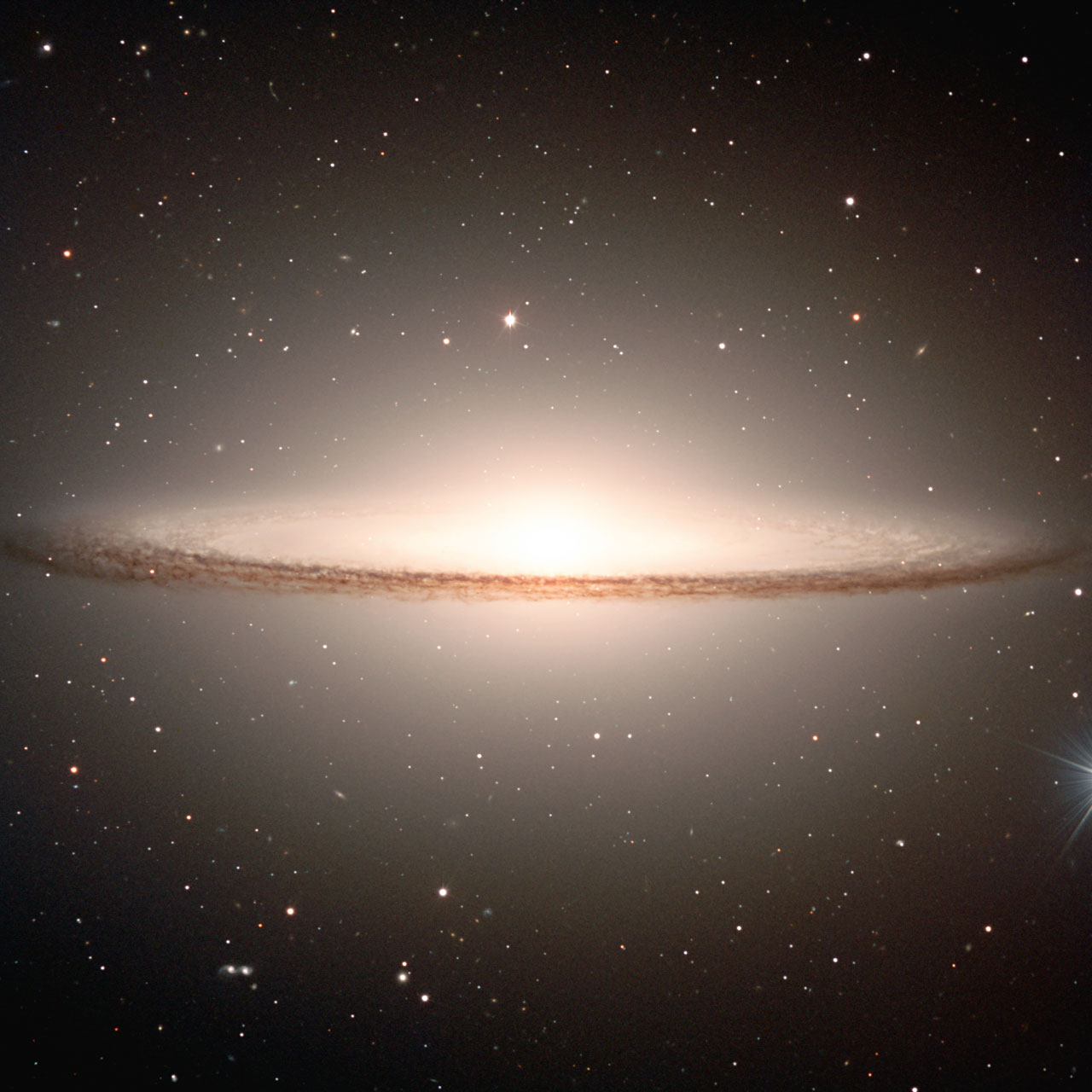
The black hole that has grown the most can be found in the Sombrero galaxy . The researchers estimate that this black hole has been swallowing the equivalent of one Sun every twenty years and is now over 500 million times as heavy as the Sun.  ESO Public Image Release

The black hole that has grown the most can be found in the Sombrero galaxy . The researchers estimate that this black hole has been swallowing the equivalent of one Sun every twenty years and is now over 500 million times as heavy as the Sun. ESO Public Image Release


In a new study led by University of Central Lancashire astronomer Dr. Victor Debattista, researchers are looking into the mystery of how black holes grow and evolve. For many years, astronomers surmised black holes took on mass when their host galaxies merged, but now new modeling techniques show that black holes in spiral galaxies are forced to take on mass. (...)
Read the rest of New Research Sheds Light On Black Hole Growth (563 words)


© tammy for Universe Today, 2013. |
Permalink |
4 comments |

Post tags: , ,


Feed enhanced by Better Feed from Ozh


Lunar Exploration Company Offers the Public a Chance to Participate

Golden Spike: more human bootprints on the Moon, and you can help. Credit: Golden Spike.

Golden Spike: more human bootprints on the Moon, and you can help. Credit: Golden Spike.


Last December, when a private space exploration company named Golden Spike announced they are working to offer human expeditions to the Moon by 2020, they also said wanted to bring public along as an integral part of the company’s mission. Since their initial announcement, the Golden Spike team says they’ve been inundated with emails, letters and social media posts from people wanting to know how to take part, and how they could help speed the development of human lunar expeditions.


Today, The Golden Spike Company — which hopes to generate sustainable human lunar exploration with a series of commercial expeditions for nations, corporations, and individuals — began a 10-week Indiegogo crowdfunding campaign to enable a “participatory exploration program.” This isn’t funding the building of rockets and spaceships directly, but does allow the public to help the company accelerate their efforts.
(...)
Read the rest of Lunar Exploration Company Offers the Public a Chance to Participate (575 words)


© nancy for Universe Today, 2013. |
Permalink |
No comment |

Post tags: , , ,


Feed enhanced by Better Feed from Ozh


Tuesday, January 22, 2013

Active radar homing

A Kongsberg Defence & Aerospace Penguin anti-s...

Active radar homing is a missile guidance method in which a guided missile contains a radar transceiver and the electronics necessary for it to find and track its target autonomously. NATO brevity code for an active radar homing missile launch is Fox Three.

Advantages


There are two major advantages to active radar homing:

  • Because the missile is tracking the target, and the missile is typically going to be much closer to the target than the launching platform during the terminal phase, the tracking can be much more accurate and also have better resistance to ECM. Active radar homing missiles have some of the best kill probabilities, along with missiles employing track-via-missile guidance.

  • Because the missile is totally autonomous during the terminal phase, the launch platform does not need to have its radar enabled at all during this phase, and in the case of a mobile launching platform like an aircraft, can actually exit the scene or undertake other actions while the missile homes in on its target. This is often referred to as fire-and-forget capability and is a great advantage that modern air-to-air missiles have over their predecessors.


Disadvantages


There are three major disadvantages to active radar homing:

  • Since the missile has to contain an entire radar transceiver and electronics, it was until recently difficult to fit all of this into a missile without unacceptably increasing its size and weight. Even with today's miniaturisation making this possible, it is quite expensive to make these missiles since the sophisticated electronics within the missile are inevitably destroyed upon impact.

  • There is very little chance that targets with capable modern radar warning receiver would be unaware that an incoming missile is approaching them. This gives them sufficient time to take evasive action and deploy countermeasures. However, given the accuracy of this homing method, unless the target is especially maneuverable or the missile is not, there may not be much they can do to avoid being intercepted.

  • ARH-type missiles lose their effectiveness the closer the target is. Therefore, these types of missiles with this mounted equipment are only effective in long range confrontations.


Passive radiation homing


Many missiles employing this type of guidance have an extra trick up their sleeves; If the target does attempt to use noise jamming, they can in effect turn into an anti-radiation missile and home in on the target's radiation passively. This makes such missiles practically immune to noise jamming, in addition to removing the second disadvantage. Since they already have the radar receiver on board, this should not be a difficult feature to add (at least, it requires extra processing logic but little extra hardware).

Operation


Active radar homing is rarely employed as the only guidance method of a missile. It is most often used during the terminal phase of the engagement, mainly because since the radar transceiver has to be small enough to fit inside a missile and has to be powered from batteries, therefore having a relatively low ERP, its range is limited.[1] To overcome this, most such missiles use a combination of command guidance with an inertial navigation system (INS) in order to fly from the launch point until the target is close enough to be detected and tracked by the missile. The missile therefore requires guidance updates via a datalink from the launching platform up until this point, in case the target is maneuvering, otherwise the missile may get to the projected interception point and find that the target is not there. Sometimes the launching platform (especially if it is an aircraft) may be in danger while continuing to guide the missile in this way until it 'goes active'; In this case it may turn around and leave it to luck that the target ends up in the projected "acquisition basket" when the missile goes active. It is possible for a system other than the launching platform to provide guidance to the missile before it switches its radar on; This may be other, similar fighter aircraft or perhaps an AWACS.

Source

Creative Commons Attribution-ShareAlike License
Enhanced by Zemanta

Sunday, January 13, 2013

Whew! Big asteroid no longer threat to Earth


  • ESA’s Herschel Space Observatory captured asteroid Apophis in its field of view during the approach to Earth on January, 5-6, 2013. This image shows the asteroid in Herschel’s three PACS wavelengths: 70, 100 and 160 microns.


WASHINGTON (AP) — Upon further review, a big scary-sounding asteroid is no longer even a remote threat to smash into Earth in about 20 years, NASA says.


Astronomers got a much better look at the asteroid when it whizzed by Earth on Wednesday from a relative safe 9 million miles away. They recalculated the space rock's trajectory and determined it wasn't on a path to hit Earth on April 13, 2036 as once feared possible.


At more than 1,060 feet wide, the rock called Apophis could do significant damage to a local area if it hit and perhaps even cause a tsunami. But it was not large enough to trigger worldwide extinctions. One prominent theory that explains the extinctions of dinosaurs and other species 65 million years ago says a six-mile-wide meteorite hit Earth and spewed vast amounts of dust into the air, cooling and darkening the planet.


Read More...